


If you were fired in California for an illegal reason, such as retaliation, discrimination, whistleblowing, or taking legally protected leave, you may have grounds for a California wrongful termination claim and could be entitled to recover back pay, lost benefits, and emotional distress damages. Have you been fired in California for what you believe was an illegal or inappropriate reason? Were you terminated after you filed a workers’ comp claim, participated in a whistle-blower report, or took maternity leave? If you were dismissed on any of these grounds or for other unlawful reasons, then you might be entitled to file a California wrongful termination lawsuit and recover significant compensation.
If you suspect you might have a California wrongful termination case, contact Pimentel Law right away. Our respected California termination law attorneys focus on helping victims of injustices like wrongful termination get maximum settlements and verdicts for their claims. See our client testimonials and case results for just some of the ways we have helped clients get the justice and compensation they were owed and get on the road to recovery.
If you or a loved one have experienced wrongful termination in California, Pimentel Law is here to help you stand up for your legal rights. Your initial consultation is completely free, plus you won’t have to pay any out-of-pocket expenses or lawyer fees unless we help you recover compensation for your case. To get started, contact us at (877) 265-8084 or online to set up a free consultation with a California wrongful termination attorney.
Who Is Considered an Employee in California? What Is “At-Will” Employment?
Under California employment law, employees are defined as workers who are under the control, supervision, and direction of their employer. This often means that the employer controls how, when, and where the work is performed. Employers typically have more responsibilities to their employees than they do to independent contractors.
California is an “at-will” state, which means that employees can quit their job at any time, and employers can fire employees at any time for any lawful purpose. This California termination law means that an employer can fire someone even if they’re doing a great job and without having a specific reason. Exceptions to this rule are if the employer and employee have a contract that specifically prevents termination or if the employer fires someone for an illegal reason.
What Activities Are Protected From Unlawful Termination?
Despite that California is an “at-will” employment state, anti-discrimination, retaliation, and California wrongful termination laws prohibit an employer from terminating employees for unlawful reasons, including:
- Firing an employee after they take time off that they were entitled to, such as maternity leave, medical leave or military leave
- Terminating an employee because they reported an illegal activity or participated in a whistle-blower investigation
- Firing someone because of a personal characteristic that falls within a protected class, such as gender, religion, race, or disability
- Terminating an employee in retaliation for reporting an unsafe work condition or filing a workers’ compensation claim
These protections come from several overlapping sources of California and federal law, including the California Fair Employment and Housing Act (FEHA), enforced by the California Civil Rights Department, and whistleblower protections under California Labor Code § 1102.5. Employees may also be protected under federal law by the U.S. Equal Employment Opportunity Commission (EEOC) and by the U.S. Department of Labor’s Family and Medical Leave Act (FMLA), which protects eligible employees who take qualifying medical or family leave.
How Common Is Workplace Retaliation? What the Data Shows
Retaliation, punishing an employee for reporting discrimination, harassment, unsafe conditions, or other illegal conduct, is not a rare occurrence. According to the EEOC’s fiscal year 2024 enforcement statistics, the agency received 88,531 charges of workplace discrimination, and retaliation was the single most frequently alleged basis, present in roughly 47.8% of all charges filed, more common than harassment, disability discrimination, race discrimination, or sex discrimination. This has been true for seventeen consecutive years, underscoring how frequently employees who speak up end up facing an adverse employment action, including termination.
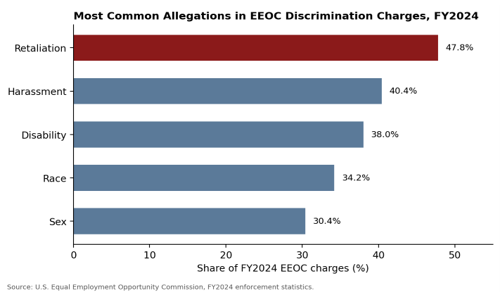
These figures reflect federal charges only and do not include the thousands of additional retaliation and wrongful termination complaints filed each year directly with California’s Civil Rights Department. If your termination followed close on the heels of a complaint, leave request, or safety report, that timing is often an important piece of evidence in a California wrongful termination case.
Steps You Should Take if You’ve Experienced Wrongful Termination in California
If you’ve been a victim of wrongful termination in California, you’re likely in shock, angry, frustrated, and sad. It’s difficult to know where to turn next, but if you think you might have been fired for an illegal reason, it’s critical to take a few steps to protect your rights:
Gather evidence. Write down everything you can think of about your termination – when it happened, who did it, the reasons they gave, what happened shortly before your termination, etc. It’s essential to write things down as soon as possible because you might forget important details later.
If possible, gather any written documents you have related to your firing, such as emails or letters. Also review your employment contract to see if it had any provisions that might have prohibited termination.
Protect yourself. If you’ve been terminated, it’s tempting to try to get back at your former employer by doing something like badmouthing the company publicly or destroying company property. However, it’s essential to avoid retaliation. Even if you have a valid wrongful termination suit in California, any type of retaliation on your part might ruin your chances of getting the compensation you’re owed.
It’s also important to protect your physical well-being, especially if you were fired in the midst of a hostile work environment. Leave the premises as quickly as possible after termination. If anyone from the company wants to talk with you later, consider speaking with them over the phone instead of going to your former workplace to meet with them.
Contact a trusted employment lawyer. Even if your termination was clearly illegal, it might be difficult to get the compensation you’re owed if you pursue a California wrongful termination lawsuit in California on your own.
Companies often have lawyers on hand who are highly paid to do everything they can to protect the company’s reputation and assets. If you try to fight them by yourself, it could have widespread impacts – not only on your current situation, but on your future prospects as well.
A respected California termination law attorney can protect your rights by helping you gather the evidence you need to support your case.
How Long Do You Have to File a Wrongful Termination Claim in California? (Statute of Limitations)
One of the most important, and most misunderstood, aspects of a California wrongful termination case is the filing deadline. The correct deadline depends on the legal theory behind your claim, and more than one deadline can apply to the same firing. Missing the applicable window can permanently bar an otherwise valid claim, which is why it’s important to speak with an attorney as soon as possible after you’re let go. The table below summarizes the most common deadlines under California law:
Because these clocks run independently and some are considerably shorter than others, employees who wait too long risk losing claims they didn’t even realize they had. For the most current filing procedures, see the CRD’s complaint process page directly.
Damage Awards in Wrongful Termination Lawsuits
The damages that employees can recover after wrongful termination in California typically include compensation for things like:
- Back pay
- Emotional distress
- Lost income and benefits
- Legal costs
In certain situations, workers might also be able to recover punitive damages if their employer’s wrongdoing was especially heinous.
Why Choose Pimentel Law? How We Can Help
At Pimentel Law, we focus on providing high-quality, personalized service to each of our clients, so you can trust you’ll get the attention you deserve. Our compassionate and experienced California termination law attorneys will take the time to get to know you and help you make the best decisions for your personal circumstances, and we won’t rush through your case.
If you’ve been a victim of wrongful termination in California, you don’t have to face this alone. Pimentel Law is here for you. We’ll stand by you and aggressively fight for your rights throughout a trial and appeal if that’s what it takes to help you get the compensation you deserve. To schedule your free, no-obligation California wrongful termination consultation and learn more about what Pimentel Law can do for you, call us today at (877) 265-8084 or contact us online.

Gabriel Pimentel is the founder and Senior Trial Lawyer of Pimentel Law, a Pasadena based firm representing plaintiffs in personal injury and employment cases across Los Angeles. A Loyola Law School graduate with over a decade of trial experience, he has won multimillion dollar settlements and verdicts in cases involving serious injury, wrongful death, and workplace retaliation, along with several appellate victories before the California Courts of Appeal. He is an Avvo Top Attorney and CAALA Plaintiff Trial Academy graduate.