

Imagine clocking into work, giving it your all, then realizing your paycheck doesn’t reflect the time you put in. No overtime pay. Missing hours. Maybe that last paycheck never even showed up.
This isn’t just an occasional error, it’s a growing crisis across the U.S. Workers are fighting back, from restaurants to warehouses to remote offices. And that battle is rearing its head in courtrooms, with unpaid wages lawsuits causing a surge as workers insist on what the book owes them.
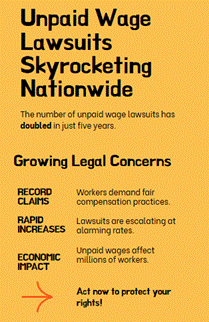
What about the increasing number of lawsuits? Who or what is behind this surge, and what can we do to keep employees safer when the system fails to work with them?
Why Are Unpaid Wage Lawsuits Skyrocketing?
Across the country, thousands of workers are turning to the legal system to recover lost earnings. According to recent data, unpaid wage violations are among the most common forms of wage theft. The Economic Policy Institute calls it a “silent epidemic,” with billions in wages stolen every year, especially from low-income and hourly workers.
What’s Fueling the Lawsuits?
Unpaid wage lawsuits often boil down to five key violations. Here’s a breakdown:
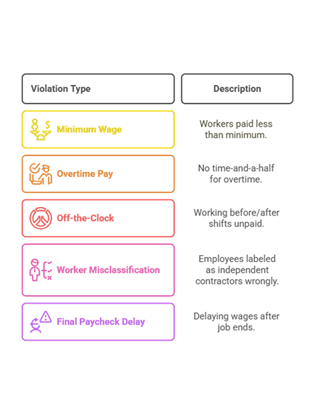
When these issues accumulate, especially among large groups of employees, they often lead to class action lawsuits and multimillion-dollar settlements.
The Power Imbalance Behind Wage Theft
According to the report published by the Economic Policy Institute, the problem of wage theft, including the unpaid overtime, the violation of the minimum wage, the off-the-clock work, and the misclassification of employees, is not merely an issue of individual malefactors but the system itself. They state that it results from an uneven balance of power within the labor market, in which employers frequently take advantage of enforcement, laws, and arbitrations at the expense of workers, who have little to no leverage or action against them, particularly low-wage or undocumented workers.
Here’s a similar quote from an EPI report:
“Wage theft is not only a widespread and severe problem for workers, it is also a symptom of deeper failings in our economy. It reflects an erosion of workers’ bargaining power and a failure of our enforcement systems to protect working people.”
Most of these workers are foreigners, individuals of color, or those with low wages; they might be afraid to speak up, as retaliation or termination will be a threat. The rest find out they are underpaid later on.
And this lack of power has resulted in advocacy groups saying more needs to be done on the accountability issues, such as:
- More aggressive enforcement from labor departments.
- Whistleblower protections to shield reporting employees.
- Public transparency of wage violation records by companies.
Legal Pathways for Recovery
Here’s the thing: workers do have rights, and when those rights are violated, there are legal remedies. Filing an unpaid wages lawsuit isn’t just about recovering money, it’s about restoring dignity and forcing change.
Key steps include:
| Step | Action |
| Document Everything | Keep records of hours worked, pay stubs, communications, etc. |
| Know the Law | Federal laws (like FLSA) and state wage laws provide strong protection. |
| Consult an Attorney | A skilled unpaid wages attorney can assess the case and file a claim. |
| File with Labor Boards | Workers can file claims with state or federal labor departments. |
The law protects workers from retaliation, and many unpaid wage claims result in full back pay, legal fees, and even punitive damages.
Tangible Outcomes: Justice Delivered
Large settlements aren’t just media stories, they’re happening regularly across industries:
- A group of restaurant workers in California recovered over $1.5 million in unpaid overtime and missed breaks.
- Warehouse workers sued for off-the-clock loading times, winning a class settlement worth millions.
- Home care aides recovered unpaid travel time and overnight shift wages that had been withheld for years.
These wins are setting precedents and sending a message.
The Role of Employment Law Attorneys
People owed wages need more than just anger, they need legal ammunition. That is when employment law attorneys get involved. They are experts in finding pay violations, holding employers responsible, and navigating complicated labor laws.
From negotiating settlements to filing class actions, they are the backbone of wage justice.
Legal experts often provide:
- Free case evaluations
- No upfront legal fees (many operate on a contingency basis)
- Multilingual services for diverse communities
- Aggressive litigation against corporations violating wage laws
How Does Legal Help Make All the Difference?
Employment law is technical. Employers often use loopholes, complicated job classifications, or confusing pay structures to disguise wage theft.
That’s why experienced attorneys in this space:
- Know how to dig through timecard data and payroll systems.
- Are well-versed in federal and state laws like the Fair Labor Standards Act (FLSA).
- Stay on top of changing labor regulations and court decisions.
- Have strong relationships with labor boards and expert witnesses.
And most importantly, they don’t let employers get away with shortchanging workers.
When to Act: Don’t Wait
Claims of wages are a time-sensitive matter. Any lawsuit concurring with the wage violation lawsuits is subject to a statute of limitations, but rules vary by violation type and state, though two or three years is common.
It has the possibility of lifelong travelling to seek back stolen wages in case of delay of action.
Take the First Step Toward Justice
When it happens to your paycheck, they simply don’t count the work hours you have put in, or when you simply feel that there is some form of wage theft around you at your workplace, don’t wait.
This is what should be done next:
- Record your pay and time.
- Receive knowledge on your rights by looking at the labor laws in your state.
- Talk to a lawyer about a legitimate unpaid wages lawsuit; most offer consultation on unpaid wages.
Justice begins by knowing and is bolstered by action.
Final Thoughts
The claims on unpaid wages have grown beyond a fad; they are an accountability. Laborers are no longer keeping quiet. With technology, it is much easier to keep up with the hours worked and pay comparisons, and it is much easier to be organized. Advocacy groups are louder than ever.
Employers, too, have been put on notice: Transparency, fairness, and adherence to the law are not at will anymore. Wage theft can no longer place itself in the shade as more cases appear in court and more people are informed about it.
For workers seeking fairness and pay that matches their work, legal support is not just available, it’s winning.