

Retaliation at work isn’t just unfair, it’s illegal. Yet, it happens every day in offices, warehouses, and job sites across Los Angeles. Employees who speak up about discrimination, safety violations, or unpaid wages often find themselves punished for doing the right thing. Maybe you’ve been demoted, isolated, or even fired after reporting misconduct.
The challenge is that retaliation isn’t always apparent. Sometimes, it’s subtle, a shift change that disrupts your life or a sudden loss of opportunities. That’s why consulting a labor law attorney in Los Angeles is critical. An experienced attorney can help identify patterns of retaliation, gather evidence, and pursue the compensation you deserve.
If this sounds familiar, it’s time to understand your rights and your next steps.
Why You Don’t Have to Stay Quiet?
Why employees stay silent is the most practical question there is. People worry about their mortgage, their reputation, and losing that health insurance. They worry about being labeled “difficult” and getting blackballed from the entire industry. And, yeah, sometimes those worries are right. But silence? Silence guarantees nothing changes. And it ensures your employer gets away with it.
The High Rate of Retaliation When Workers Speak Up:

Recognizing the Subtle Signs of Retaliation
Look, the easy cases are when you complain on Monday and you’re fired on Friday. We see those. However, most retaliation is more subtle than that. It’s designed to look like a legitimate business decision.
- Job Evaluations: Did you have great reviews for three years straight, and suddenly, after you mentioned the overtime issue, your latest review says you “lack initiative”? That’s a huge red flag.
- Isolation Tactics: Removed from major email threads, learns about what is happening in the team too late, or has his lead projects re-allocated. They are icing you, putting your job in a place where it seems unattainable, hoping you will resign. It is referred to as constructive discharge when it becomes that bad.
- Hyper-Scrutiny: You are no longer allowed to enter and exit the office at the same time your manager is scrutinizing your time and materials, commenting on the font you use in emails or taking every 5 minutes off and recording it. There is no other person who is under this magnifying glass. They’re building a file on you.
When these things happen close in time to a protected activity, such as reporting a safety violation or requesting a disability accommodation, it’s not a coincidence. It’s a violation of the California Labor Code. You need a labor law attorney in Los Angeles who understands that chronology is a crucial form of evidence.
Building Your Case: The Steps an Attorney Takes
We’ve seen cases where employees took the right step by reporting unfair treatment or violations, only to face negative consequences soon after. We examine that timeline closely because when a positive action is quickly followed by retaliation, the timing often becomes strong evidence in proving the case.
First step: Document Everything. Seriously, everything. Record what, when, and who. Copy any suspicious emails, strange texts, and any negative performance reviews that appear out of the blue, ideally to a different machine other than the one that you work with. You need that paper trail.
Second, stay totally professional at work. Do your job well. Please don’t give them a real reason to fire you. But the most critical step? Seek Legal Help. You absolutely need an expert to review the evidence.
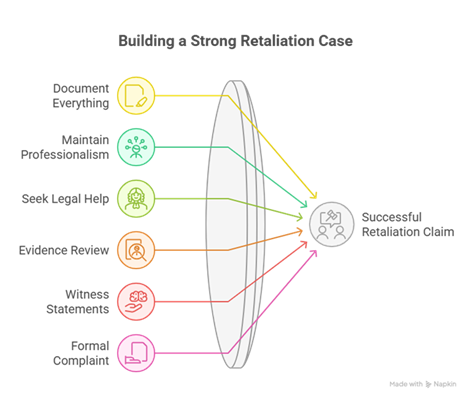
Once you hire a labor law attorney in Los Angeles, we start by meticulously reviewing your evidence. We look for the “three elements” of a retaliation claim:
- You participated in a safe action (complaining about discrimination, refusing to do something against the law, etc.).
- Your employer has made a disadvantageous employment decision against you (firing, demotion, exclusion).
- The two have a causal relationship. The action occurred as a result of the complaint.
This is where the lawyering comes in. We gather witness statements, compare your treatment to that of co-workers who didn’t complain, and file the formal complaint with the CRD. We manage all of that, securing your right-to-sue letter when the time is right to move your case to civil court.
The Consequences for the Employer And Your Remedies
The company that retaliates is exposing itself to significant legal risk, and it is aware of this. It hurts them financially and ruins their reputation. Workplace retaliation is never a sound business decision.
In your case, as an employee, a successful retaliation lawsuit getting you fired can amount to a wrongful termination and can cause make-whole gratifications of the first order:
- Back Pay and Front Pay: You receive the amount of all the wages and benefits that you lost since the day you were fired/demoted in a wrong manner until the case is solved. If we can’t get your job back, you get “front pay”, estimated future lost earnings.
- Emotional Distress Damages: This compensates you for the anxiety, humiliation, and psychological toll the retaliation caused. These damages can be substantial in California.
- Reinstatement: Regaining your original job (although many employees choose not to return).
- Attorney Fees and Costs: The employer is often required to cover our legal expenses.
Taking legal action is how you stop that spiral. It is a partial regaining of control over your work life and self-respect. Legal proceedings do not always take a long time, but a skilled defender makes a significant difference. Your boldness to act will not only alter your fate but also set a pattern for others.
FAQ
Q: In California, what is the time period in which a retaliation claim may be filed?
A: Within the time frame of the last retaliatory act, you are entitled to a period of three years upon the date of the previous act in filing an administrative complaint with the help of a labor law attorney in Los Angeles.
Q: Can my employer in California just fire me without any reason on my part?
A: California is an at-will state, meaning that employers can easily dismiss employees for any reason or no reason. When this occurs, it is considered wrongful termination.
Q: How do I know if I’m facing retaliation?
A: Sudden demotions, bad reviews, or isolation after speaking up are key warning signs.
Q: Can I be fired for reporting issues at work?
A: No. That’s illegal under California labor laws.
Q: When should I contact a labor law attorney?
A: Immediately after noticing any negative treatment following your complaint.
Final Warning: Do Not Miss the Deadline
Many good cases die because the employee waited too long. Remember that three-year window with the CRD; that clock starts ticking the day the retaliation happens. Please don’t waste time trying to fix it yourself through endless HR meetings that only give your employer more time to build their pretextual defense. You need to gather your evidence and consult a labor law attorney in Los Angeles. This is an urgent matter.